
Learning how to write a professional CV can feel overwhelming especially when you know how competitive the job market is, but don’t have the budget to hire a CV writing service. The good news is that a strong, professional CV is still achievable on your own, provided you approach it with the right mindset and strategy.
Many job seekers assume that professional CVs are about fancy templates or expensive design tools. In reality, what separates an average CV from a professional one is clarity, structure, and intent. Recruiters and hiring managers are not looking for your entire career history they are looking for evidence that you are the right fit for a specific role.
This guide is designed to help you understand how to write a professional CV step by step, using practical, honest techniques that do not require paid services or design expertise. By focusing on strategy rather than aesthetics, you can create a CV that competes confidently in today’s hiring landscape.
1. Start With Strategy, Not Formatting
One of the biggest mistakes people make when trying to write their own CV is opening a template before they understand what the CV is meant to achieve.
A CV is not a biography, a timeline of every job you’ve ever held, or a place to list everything you’ve ever done. It is a targeted marketing document with one purpose: to convince a recruiter that you are worth interviewing for this specific role.
Before you choose a layout, font, or template, you need to be clear on three critical points:
Identify the Exact Role You Are Targeting
Trying to use one generic CV for every job significantly weakens your chances. Start by identifying the exact role you want to apply for. This clarity will guide every decision you make from the wording of your profile to the experience you choose to highlight.
Ask yourself:
-
What is the job title I am applying for?
-
What level is the role (junior, mid-level, senior)?
-
What problem is this role meant to solve for the employer?
Understand the Skills, Keywords, and Outcomes the Role Requires
Job descriptions are not just adverts they are instruction manuals for your CV. Carefully read the job posting and take note of:
-
Repeated skills and competencies
-
Industry-specific terminology
-
Outcomes the employer expects (e.g. growth, efficiency, leadership, delivery)
When learning how to write a professional CV, this step is crucial. Modern CVs are often screened by Applicant Tracking Systems (ATS), which prioritise relevance and keyword alignment. Using the language of the role honestly and accurately improves both human and automated screening.
Decide What Experience Is Relevant (and What Can Be Trimmed)
Not every role you’ve held deserves equal space on your CV. Once you know the role you are targeting, you can decide:
-
Which experiences directly support your suitability
-
Which roles can be shortened or summarised
-
Which information no longer adds value
Removing irrelevant detail is not hiding experience it is refining your message.
Key Message to Remember
A CV is not a career history document.
It is a targeted marketing tool designed to position you for a specific opportunity.
When you start with strategy instead of formatting, you lay the foundation for a CV that looks professional not because of how it’s designed but because of how clearly it communicates your value.
2. Choose an ATS-Friendly Layout
Once you understand the role you are targeting and the message your CV needs to communicate, the next step in learning how to write a professional CV is choosing the right layout. This is where many well-intentioned DIY CVs unintentionally fail.
Most employers use Applicant Tracking Systems (ATS) to screen CVs before a human ever reads them. These systems are designed to scan, parse, and rank CVs based on structure, keywords, and clarity not visual design. A CV that looks impressive to the eye but cannot be read properly by an ATS may never reach a recruiter at all.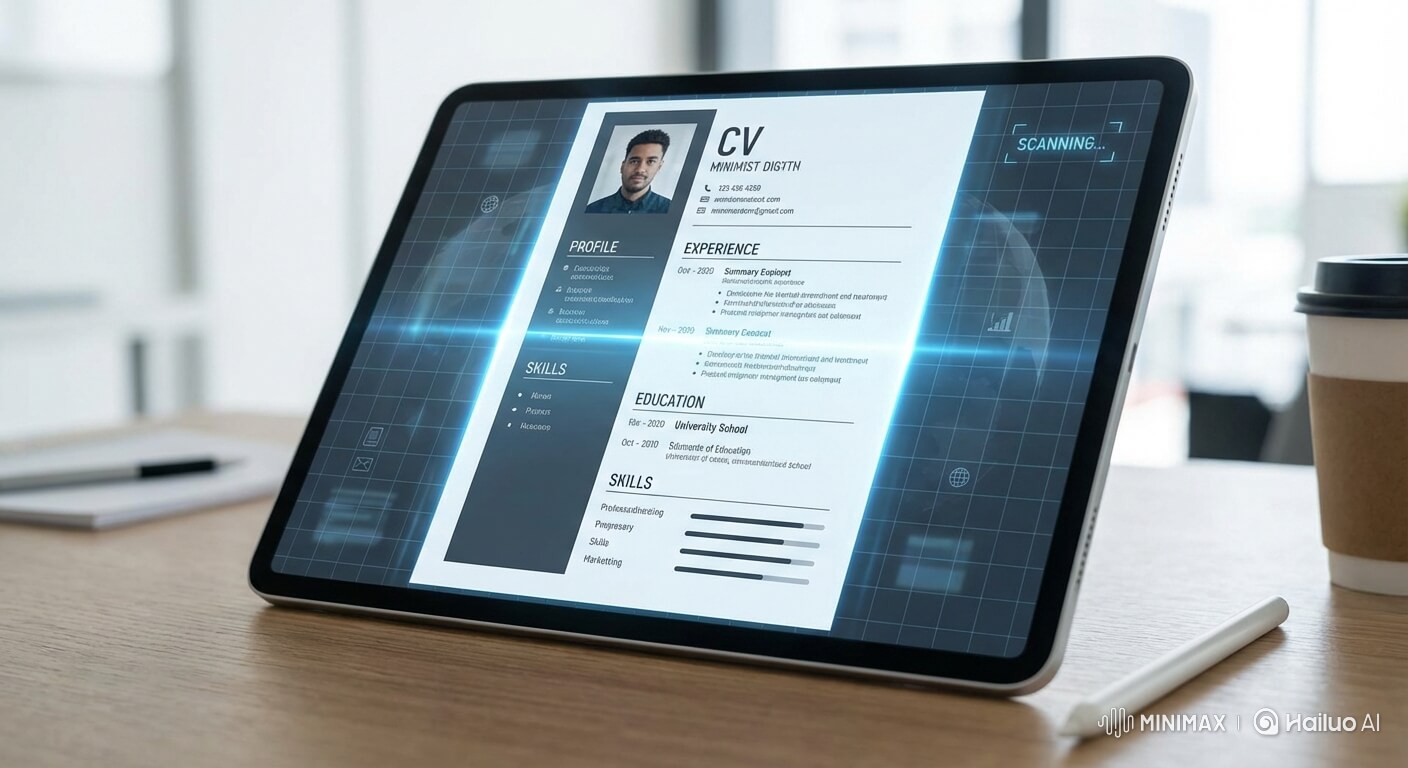
Keep the Layout Clean and Simple
Professional CVs prioritise readability over decoration. The safest DIY approach is a single-column layout with clearly defined sections and consistent spacing.
Best practice includes:
-
One uniform structure from top to bottom
-
Clear section headings such as Profile, Experience, Education, and Skills
-
Consistent margins and line spacing
-
Bullet points for achievements instead of long paragraphs
Complex layouts with columns, or floating text boxes may look modern, but they often confuse ATS software and break the logical reading order of your CV.
Avoid Graphics and Tables
When writing your own CV, it can be tempting to use icons, charts, timelines, or tables to make it stand out. Unfortunately, these elements are among the most common reasons CVs fail ATS scans if not done correctly.
Avoid:
-
Improper use of icons
- Tables for experience or skills
-
Text embedded inside shapes or images
ATS software reads text linearly. Anything that disrupts this flow can cause information to be skipped, misread, or ignored entirely.
Use Standard, Professional Fonts
Font choice plays a bigger role than most people realise. To ensure maximum compatibility and a professional appearance, use standard, widely recognised fonts.
Recommended fonts include:
-
Arial
-
Calibri
-
Helvetica
-
Verdana
Stick to a body font size between 10.5 and 12 points, and slightly larger sizes for headings. Consistency matters more than creativity.
Choose the Right File Format
Understanding how to write a professional CV also means knowing how to submit it correctly. Always follow the employer’s instructions, but when given a choice:
-
PDF is usually the safest option for preserving formatting
-
Word documents (.doc or .docx) may be preferred by some ATS systems
If no preference is stated, PDF is generally acceptable but ensure the document is text-based, not a scanned image.
Let Structure Do the Heavy Lifting
A professional CV does not rely on colour, design, or graphics to appear polished. Its professionalism comes from:
-
Logical flow
-
Clear hierarchy
-
Easy scanning
Recruiters typically spend only a few seconds on an initial CV review. A clean, ATS-friendly layout allows them to quickly identify who you are, what you do, and why you are relevant which is exactly what your CV is meant to achieve.
Key Takeaway
When learning how to write a professional CV without a CV writing service, remember this: If an ATS can’t read your CV, a recruiter never will.
Choosing a simple, structured, ATS-friendly layout ensures your CV is seen, understood, and taken seriously regardless of whether it was written by a professional service or by you.
3. Write a Strong Personal Profile (Without Buzzwords)
One of the most important elements when learning how to write a professional CV is the personal profile sometimes called a professional summary. This short section sits at the top of your CV and is often the first thing a recruiter reads.
A strong personal profile sets the tone for the entire document. A weak one, filled with generic phrases, can cause a recruiter to lose interest within seconds.
The goal of your personal profile is not to describe your personality it is to position your professional value clearly and quickly.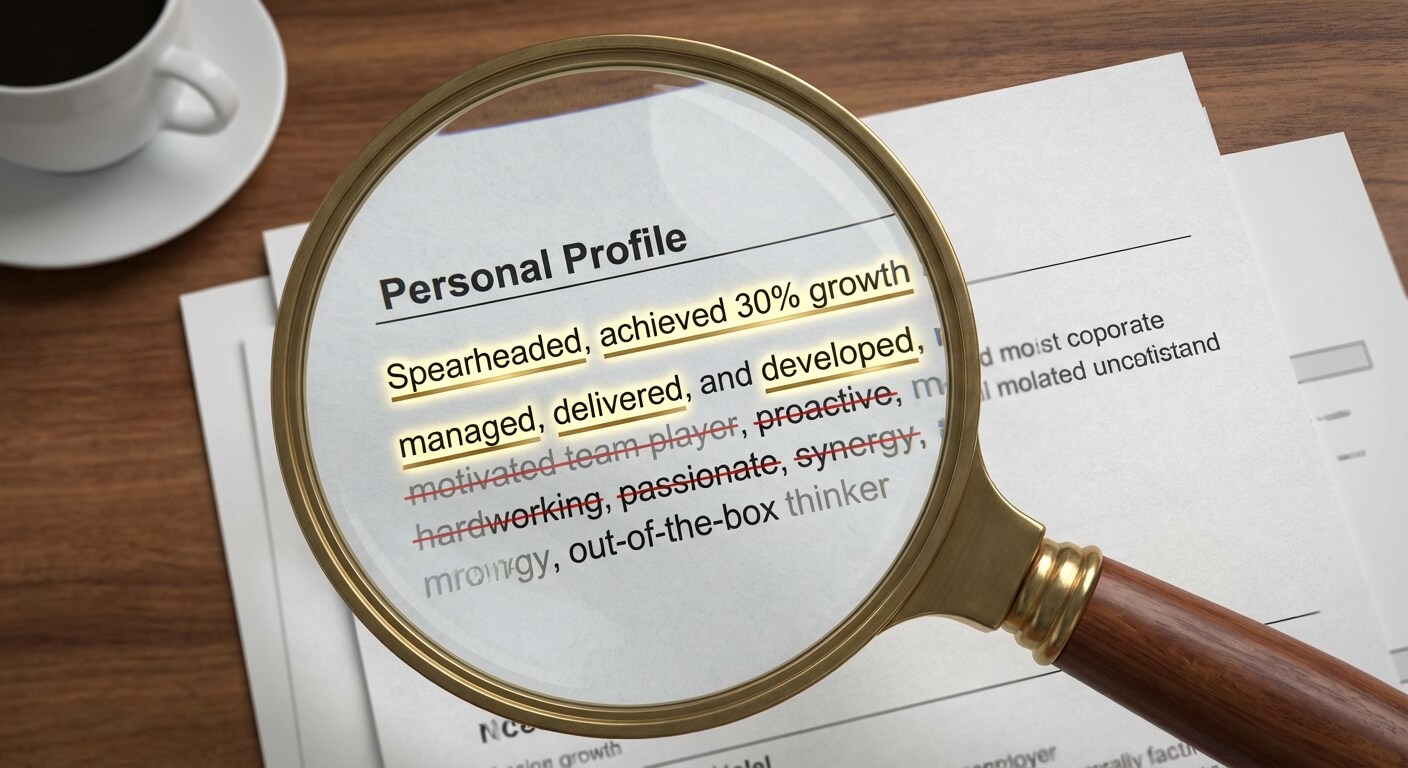
Keep It Short and Focused
A professional personal profile should be a few lines long. Anything longer risks becoming unfocused and unreadable.
Recruiters scan CVs quickly. Your profile needs to answer three silent questions immediately:
-
What do you do?
-
Who do you help or work with?
-
How do you add value?
If your profile cannot do this within a few lines, it is trying to do too much.
Focus on Value, Not Adjectives
Many DIY CVs rely on buzzwords such as “hardworking,” “results-driven,” “dynamic,” or “team player.” While these terms sound positive, they offer no evidence and are used so frequently that they have lost all impact.
Instead of describing how you think you are, focus on what you do and what you deliver.
A strong personal profile is factual, specific, and aligned with the role you are targeting.
Use a Simple, Effective Structure
If you are unsure how to start, use this framework as guidance not as a rigid template:
-
Your role and level of experience
-
Your core area of expertise
-
One clear value statement that connects you to the employer’s needs
This structure allows you to sound confident and professional without exaggeration.
Key Takeaway
A strong personal profile elevates your CV instantly.
It transforms the document from a list of experience into a clear professional proposition.
When written well, this short section signals confidence, clarity, and relevance all of which separate a professional CV from a basic one.
4. Turn Job Duties Into Achievements
This is the section where most DIY CVs either become truly professional or remain basic.
Many people describe their work by listing what they were responsible for, rather than what they actually achieved. While responsibilities explain your role, achievements demonstrate your value. Recruiters are far more interested in the latter.
If you want to learn how to write a professional CV that stands out, you must move beyond job descriptions and start showing impact.
Understand the Difference Between Duties and Achievements
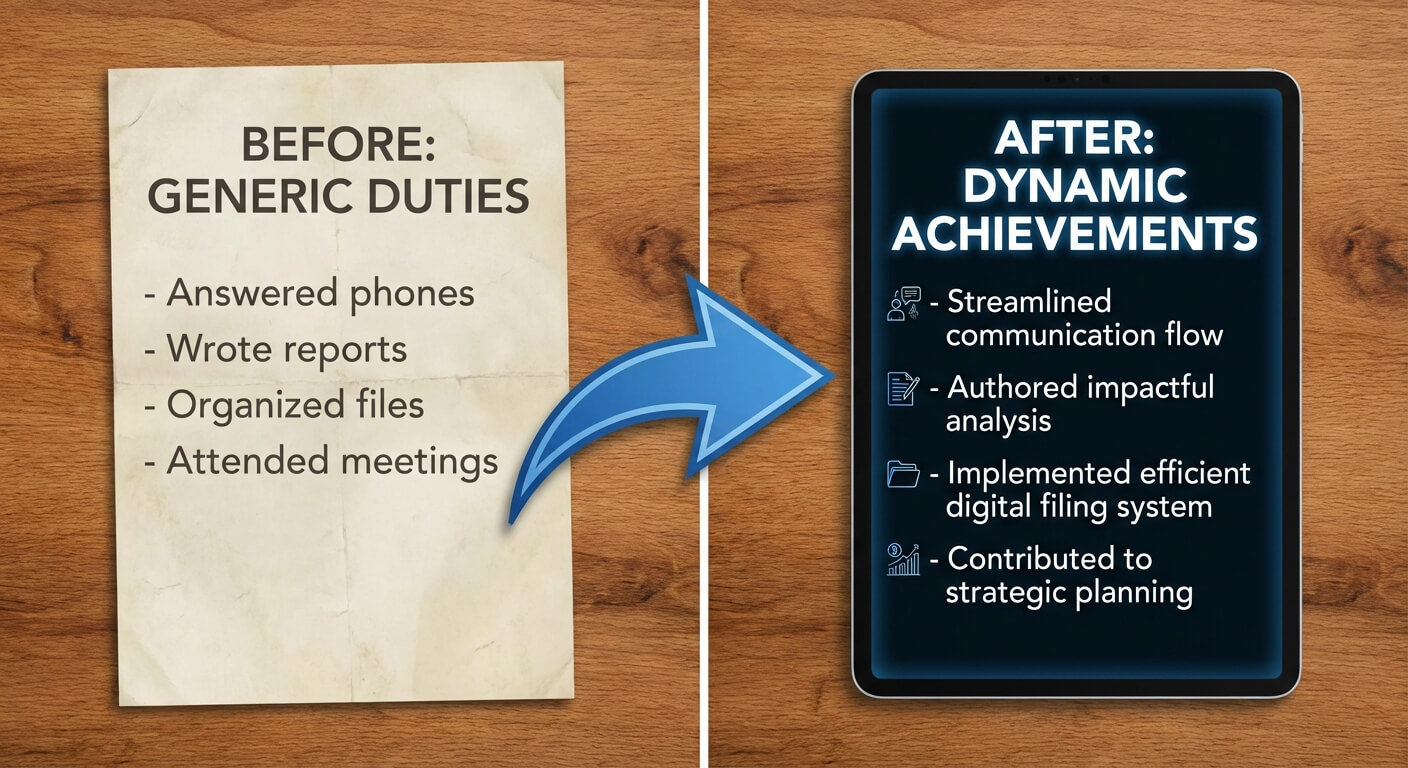
Job duties describe what you were hired to do.
Achievements show how well you did it and what changed because of your contribution.
Duties alone tell a recruiter very little. Achievements provide context, credibility, and evidence.
A CV that focuses only on duties reads like a job advert.
A CV that highlights achievements reads like a success story.
Use a Simple Achievement Formula
To avoid guesswork, use this straightforward structure when writing bullet points:
Action + Skill + Result
This approach helps you clearly articulate your contribution without exaggeration or unnecessary detail.
Ask yourself:
-
What action did I take?
-
What skill or expertise did I use?
-
What was the outcome or improvement?
You do not need to quantify everything, but numbers, percentages, timeframes, or improvements strengthen your statements wherever possible.
Focus on What Changed Because of You
When deciding what to include, think beyond daily tasks. Consider:
-
Did you improve efficiency, quality, or turnaround time?
-
Did you contribute to growth, savings, or problem-solving?
-
Did you lead, support, or influence others in a meaningful way?
Even roles that seem routine often have outcomes worth highlighting. The key is reflection, not embellishment.
Prioritise Relevance Over Volume
When learning how to write a professional CV, it’s tempting to include every achievement you can think of. This often results in long, unfocused sections.
Instead:
-
Prioritise achievements that align with the role you are targeting
-
Limit each role to a manageable number of strong bullet points
-
Remove achievements that do not support your current career direction
Less content when it is relevant is more effective than long lists with no clear focus.
Be Honest and Precise
Turning duties into achievements does not mean inflating your role or taking credit for work you did not do. Accuracy matters.
Use language that reflects your level of responsibility:
-
“Supported,” “contributed,” or “assisted” where appropriate
-
“Led,” “implemented,” or “managed” when accurate
Honest precision builds trust. Recruiters can sense exaggeration quickly, especially during interviews.
Key Takeaway
Achievements are what transform a CV from descriptive to persuasive. They show recruiters not just what you’ve done, but why it mattered.
If you master this step, you move significantly closer to understanding how to write a professional CV that competes confidently even without a CV writing service.
5. Use the Job Description as a Keyword Map (Without Copying It)
One of the most effective and misunderstood steps in learning how to write a professional CV is using the job description correctly. Many job seekers either ignore it entirely or copy sections word for word. Both approaches weaken your CV.
A job description should be treated as a keyword map, not a script.
Recruiters and Applicant Tracking Systems (ATS) use job descriptions to define what “relevance” looks like. Your CV’s job is to reflect that relevance honestly, strategically, and in your own words.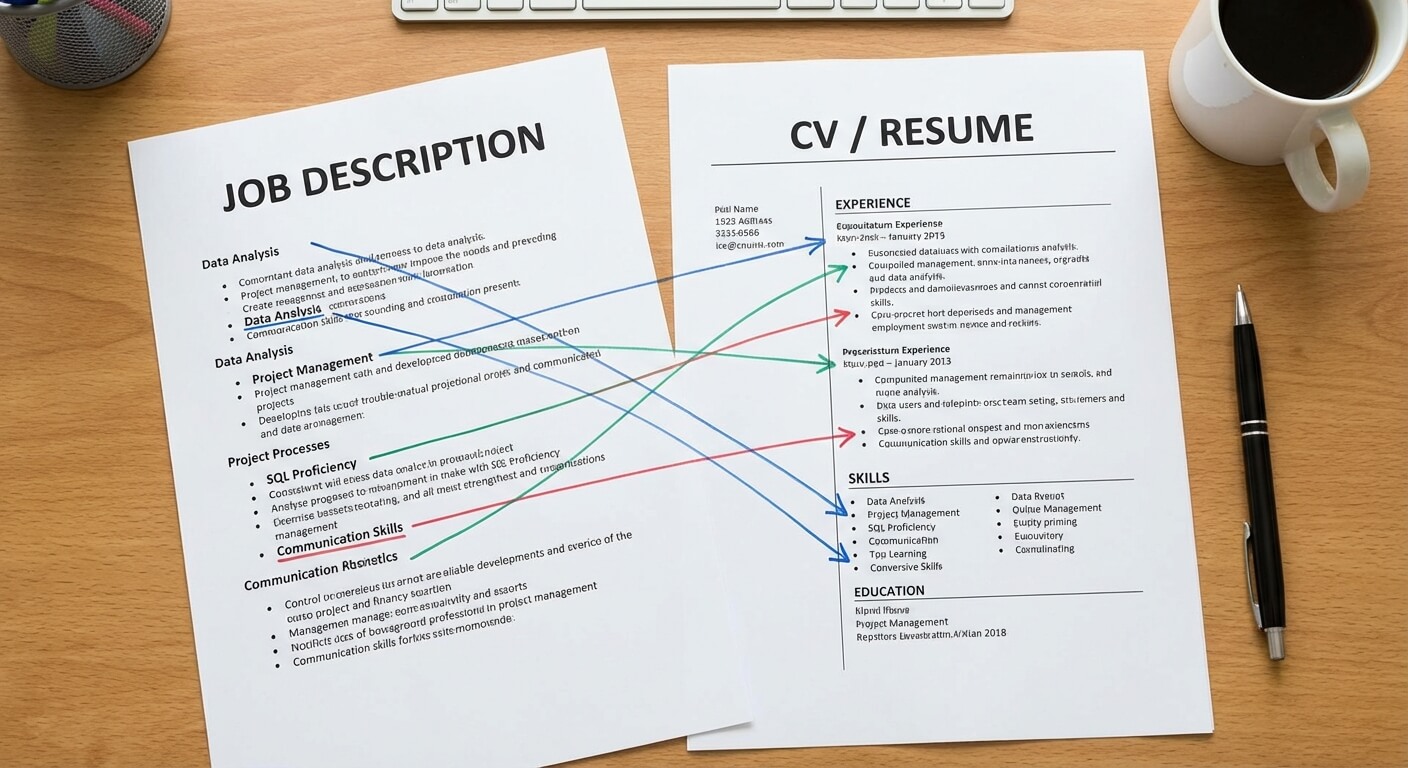
Mirror Language Naturally and Ethically
Using keywords does not mean copying and pasting the job advert into your CV. Doing so often sounds forced and can raise red flags during interviews.
Instead:
-
Use the same terminology only where it accurately reflects your experience
-
Rephrase responsibilities and achievements in your own professional voice
-
Integrate keywords into your profile, experience, and skills sections naturally
This approach ensures your CV reads well to both ATS software and human recruiters.
Align Your Achievements With Employer Priorities
Once you have identified key themes in the job description, review your achievements and ask:
-
Which of my accomplishments best demonstrate these requirements?
-
Which skills or outcomes are most relevant to this role?
-
What experience can be removed or reduced to make space for stronger alignment?
This is where Sections 4 and 5 come together. Strong achievements become even more powerful when they are framed using language the employer already recognises.
Avoid Keyword Stuffing
Overusing keywords can be just as damaging as ignoring them. CVs that feel repetitive or unnatural are easy to spot and often fail human review even if they pass ATS scans.
If a keyword feels awkward or inaccurate, leave it out. Relevance always matters more than repetition.
Adjust, Don’t Rewrite, for Each Application
You do not need to create a completely new CV for every role. When you understand how to write a professional CV properly, small adjustments go a long way.
For each application:
-
Tweak your personal profile to reflect the role
-
Reorder or replace achievement bullets
-
Adjust skill terminology to match the job description
This targeted approach saves time while significantly improving results.
Key Takeaway
The job description tells you exactly what the employer is looking for but it’s up to you to translate that into your own experience.
When used correctly, the job description becomes a roadmap that helps your CV pass ATS screening, resonate with recruiters, and position you as a strong, relevant candidate without compromising honesty or professionalism.
6. Be Honest and Strategic About Your Qualifications
One of the most sensitive and important parts of learning how to write a professional CV is knowing how to present your qualifications accurately. This is where many job seekers, often unintentionally, make mistakes that can cost them opportunities or lead to serious consequences later.
Qualifications are one of the first elements employers verify. Any ambiguity or misrepresentation, even if small, can undermine trust and damage your credibility.
List Qualifications Exactly as They Were Earned
Always state your qualifications clearly and correctly, using the official qualification name and awarding institution.
Avoid:
-
Inflating the level of a qualification
-
Using shortened titles that could be misleading
-
Listing qualifications you did not complete
If you did not earn the qualification, it should not appear on your CV as completed.
Clearly Indicate Incomplete or In-Progress Studies
If you started a qualification but did not complete it, you may still include it but only if it is clearly labelled.
Acceptable wording includes:
-
Incomplete
-
In progress
-
Studies towards
This transparency allows employers to assess your background accurately and protects you from being accused of misrepresentation.
Position Short Courses and Certifications Strategically
Professional development courses, certificates, and online learning can strengthen your CV especially if they are relevant to the role you are applying for.
When including these:
-
List only recognised or reputable providers
-
Focus on courses that support your current career direction
-
Group them under a clear heading such as Professional Development or Certifications
Avoid listing every short course you have ever completed. Relevance matters more than volume.
Do Not Attempt to “Fill Gaps” With False Credentials
When learning how to write a professional CV, it can be tempting to compensate for experience gaps by exaggerating qualifications. This is a serious risk.
Employers routinely verify qualifications through official channels. Misrepresentation can lead to:
-
Immediate disqualification from a role
-
Dismissal after appointment
-
Long-term reputational damage
No opportunity is worth compromising your integrity or future employability.
Let Experience and Skills Do the Heavy Lifting
If your qualifications are not perfectly aligned with the role, do not panic. Many employers value experience, transferable skills, and proven results just as highly sometimes more.
A well-written CV can position your strengths honestly without relying on inflated credentials.
Key Takeaway
Honesty is not a weakness it is a professional asset.
When you present your qualifications clearly and accurately, you protect your credibility and allow your experience, skills, and achievements to speak for themselves. This is a critical part of learning how to write a professional CV that stands up to scrutiny and earns trust.
7. Cut What Recruiters Don’t Care About
One of the fastest ways to improve your CV without adding anything new is to remove information that recruiters simply do not need. When learning how to write a professional CV, this step is often overlooked, yet it has a powerful impact on clarity and readability.
Recruiters spend only a few seconds scanning a CV during the initial review. Any unnecessary content competes with the information that actually matters and makes your CV harder to assess.
Remove Personal Information That Is Not Relevant

In most modern job markets, especially for professional roles, personal details add no value and can even introduce bias.
You should avoid including:
-
ID or passport numbers
-
Date of birth or age
-
Marital status or number of dependants
-
Religion, nationality (unless legally required), or home address
A professional CV focuses on capability, not personal circumstances.
Trim Early or Irrelevant Experience
If you have several years of experience, recruiters are far more interested in your recent and relevant roles than in what you did at the start of your career.
Consider:
-
Removing or summarising roles that are no longer relevant
-
Reducing detail for older positions
-
Eliminating casual or unrelated work unless it adds clear transferable value
This keeps your CV focused and prevents it from becoming unnecessarily long.
Rethink the Education Section
Once you have tertiary qualifications or professional experience, older education details often become redundant.
In most cases, you can:
-
Remove primary or early high school details
-
Keep the education section concise and factual
-
Focus on qualifications that support your current career direction
This is an important part of learning how to write a professional CV that reflects your current level, not your past.
Aim for Clarity, Not Length
A common misconception is that longer CVs look more impressive. In reality, clarity beats volume every time.
A strong professional CV:
-
Is concise
-
Is easy to scan
-
Highlights only what supports your application
Cutting unnecessary content makes your key achievements and skills stand out more clearly.
Key Takeaway
A professional CV is defined as much by what you leave out as by what you include.
By removing irrelevant details and focusing only on information that supports your suitability for the role, you create a cleaner, more persuasive document a crucial step in mastering how to write a professional CV without professional services.
8. Proofread and Quality-Check Like a Professional
Even the strongest CV can be undermined by simple errors. When learning how to write a professional CV, proofreading is not an optional final step it is a critical quality-control process that protects your credibility.
Recruiters often interpret spelling, grammar, and formatting mistakes as a lack of attention to detail. In competitive hiring environments, even minor errors can be enough to move a CV into the rejection pile.
Review Your CV With Fresh Eyes
After completing your CV, step away from it for a few hours or a day if possible. Returning with fresh eyes makes it easier to spot errors, inconsistencies, or awkward phrasing that you may have missed while writing.
Reading your CV aloud can also help identify:
-
Repetitive wording
-
Unclear sentences
-
Sections that do not flow logically
If something sounds confusing when spoken, it will likely be confusing to a recruiter as well.
Check for Consistency and Formatting Accuracy
Professional CVs are visually consistent and easy to scan. Before submitting your CV, review:
-
Font type and size consistency
-
Bullet point alignment
-
Spacing between sections
-
Consistent use of dates and tense
For example, current roles should be written in the present tense, while past roles should use the past tense. Inconsistencies signal carelessness even when the content is strong.
Use Tools But Don’t Rely on Them Blindly
Spelling and grammar tools can be helpful, but they are not perfect. Automated suggestions sometimes miss context or change the intended meaning of a sentence.
Use these tools as a support, not a substitute for careful review. Always double-check changes before accepting them.
Ask for a Second Set of Eyes
One of the most effective ways to improve your CV is to ask someone else to review it ideally someone with professional experience or familiarity with recruitment.
Ask them to check:
-
Clarity and readability
-
Whether your value comes across clearly
-
Any sections that feel confusing or unnecessary
External feedback often reveals blind spots that you cannot see yourself.
Save and Name Your CV Professionally
How you save and submit your CV is part of the overall presentation. Use a clear, professional file name such as:
Firstname_Surname_CV.pdf
Avoid generic or informal file names. This small detail reinforces professionalism and makes your document easy to identify.
Key Takeaway
A professional CV is not just well-written it is well-polished.
Careful proofreading and quality checks ensure your CV reflects the same level of professionalism you would bring to the role itself. This final review step is essential when learning how to write a professional CV that stands up to scrutiny.
9. Tailor Slightly for Every Application (Without Starting From Scratch)
One of the most common misconceptions about CV writing is that every job application requires a completely new CV. In reality, mastering how to write a professional CV means learning how to make small, strategic adjustments that significantly improve relevance without rewriting the entire document each time.
Recruiters can quickly spot generic CVs. A few targeted changes can make your application feel intentional and role-specific, even when the core structure stays the same.
Adjust Your Personal Profile First
Your personal profile is the fastest and most effective section to tailor. Before submitting your CV:
-
Align your role title with the job description
-
Emphasise the most relevant area of expertise
-
Adjust your value statement to reflect the employer’s priorities
These small changes help your CV speak directly to the role without altering your entire experience section.
Reorder Achievements to Match the Role
You don’t need to rewrite your achievements you just need to reorder them.
For each application:
-
Move the most relevant achievements to the top of each role
-
De-emphasise or remove bullets that do not support the position
-
Highlight outcomes that align with the job description’s key themes
Recruiters tend to read from the top down. Lead with what matters most to them.
Update Keywords Thoughtfully
Revisit the job description and ensure the most important keywords are reflected naturally in your CV particularly in:
-
The profile section
-
Key achievement bullets
-
The skills section
This improves ATS alignment while keeping your CV readable and authentic.
Keep a Master CV for Efficiency
To avoid starting from scratch every time, maintain a master CV that includes all roles, achievements, and skills. From this version, you can create tailored copies for specific applications.
This approach:
-
Saves time
-
Reduces errors
-
Ensures consistency
It is one of the most practical habits you can adopt when learning how to write a professional CV independently.
Know When to Stop Tweaking
Perfectionism can slow down your job search. Once your CV is:
-
Relevant to the role
-
Error-free
-
Aligned with the job description
…it is ready to submit.
At some point, further changes offer diminishing returns. Consistent, targeted applications are more effective than endless revisions.
Final Takeaway
You don’t need dozens of different CVs you need one strong foundation and the ability to adapt it intelligently.
When you tailor strategically rather than starting over, you preserve quality, maintain momentum, and apply with confidence. This final step completes the process of learning how to write a professional CV even without a CV writing service.
10. Know When DIY Has Reached Its Limit
Learning how to write a professional CV on your own is an empowering process. For many job seekers, a well-crafted DIY CV is more than enough to open doors, secure interviews, and move their careers forward. It builds confidence, clarity, and a deeper understanding of how you present your value in the job market.
However, it is equally important to recognise that DIY has its limits and acknowledging those limits is not a weakness.
DIY CVs Are a Strong Starting Point
If you are early in your career, applying for roles similar to ones you’ve held before, or simply need a solid, professional document, a DIY CV is often an excellent solution. With the right strategy and structure, you can create a CV that is honest, focused, and competitive without spending money you don’t have.
Starting on your own is not cutting corners. It is taking ownership.
Some Career Stages Benefit From Expert Input
There are moments in a career where complexity increases and the margin for error becomes smaller. These include:
-
Executive or senior leadership roles
-
Career pivots into new industries or functions
-
International job applications with different expectations
-
Highly competitive or specialised positions
At these stages, professional CV writers bring more than formatting they bring perspective, positioning, and market insight. They help translate complex experience into a clear, compelling narrative that speaks directly to decision-makers.
Professional Help Is Strategy, Not Failure
Choosing to invest in professional support later does not invalidate the work you’ve done yourself. In fact, it often builds on it.
The most successful professionals understand when to do things themselves and when to bring in expertise. Viewing professional CV writing as a strategic investment rather than a last resort allows you to approach your career with intention and confidence.
Final Thought
Knowing how to write a professional CV empowers you to take control of your career story. Knowing when to seek expert support ensures that story is positioned at the right level, at the right time.
Both approaches are valid. Both are professional. The key is choosing the one that best serves your next move.